Thursday, July 4, 2013

Freedom of the Press - Myanmar continues to make quick reforms

Freedom of the Press - Myanmar continues to make quick reforms

Myanmar’s Union Parliament is poised to vote on at least two major press freedom bills before the end of this summer. Some components of the draft laws are welcomed, but the drafting process is raising concerns. Parliament should take the opportunity and their time review these bills, and perhaps allow reform process to slow down a bit.
The first major piece of legislation to be introduced in Parliament in the coming weeks is the Printing and Publishing Enterprise Law. Several strict rules of self-censorship still remain. The Ministry of Information (MOI) has come under internatioanl and domestic criticsm for its continued arcane policies. This original version of the bill was introduced last March. The criticism lead the MOI to revise the bill in consultation with the Myanmar Press Council, a 28-member body of journalists and 10 government-appointed representatives.
Parliament will also vote this month on a draft Public Service Media (PSM) bill. This bill would have 70 percent of PSM funding come from public funds and the remainder from commercial activities. It also calls for the creation of a 15-member administrative team appointed by the president and Parliament to oversee the transformation process.
A third bill, the Press Law Bill, which the Myanmar Press Council introduced in February to outline industry standards and safeguard journalistic freedom, still waits in the wings. While the legislation does roll back some troublesome regulations, it still bans criticism of state institutions and does not meet the highest international standards.

Friday, May 24, 2013

Best Western Hotels arrives in Yangon


Best Western International has announced plans to launch its famous hotel brand in the world's most exciting emerging market, Myanmar.
The 'World's Largest Hotel Chain' has sealed an agreement to take over the management of the Green Hill Hotel, a modern new property located in the heart of Myanmar's largest city, Yangon.
In doing so, Best Western International becomes the first US hotel company to establish a presence in Myanmar, following the exciting recent developments that have allowed the country to welcome new foreign investment.
The newly built Green Hill Hotel, which has 189 rooms will now be managed and operated by Best Western International under its midscale BEST WESTERN brand.
"Best Western International wants to form long and lasting partnerships in Myanmar; we want to be here for the long-term, to help grow the country's tourism industry. Our partnership with the Green Hill Hotel is just the start of our plans for Myanmar," said Mr. Glen de Souza, Vice President of International Operations for Asia and the Middle East.

Tuesday, January 24, 2012

USA Today - IMF: World economy enters 'dangerous new phase'

WASHINGTON – The world economy has entered a "dangerous new phase," according to the chief economist of the International Monetary Fund. As a result, the international lending organization has sharply downgraded its economic outlook for the United States and Europe through the end of next year.
The IMF expects the U.S. economy to grow just 1.5 percent this year and 1.8 percent in 2012. That's down from its June forecast of 2.5 percent in 2011 and 2.7 percent next year.
To achieve even that still-low level of growth, the U.S. economy would need to expand at a much faster rate in the second half of the year than its 0.7 percent annual pace in the first six months.
Most economists expect growth of between 1.5 percent and 2 percent in the final two quarters. Though an improvement, it wouldn't be enough to lower the unemployment rate. The rate has been 9 percent or higher in all but two months since the recession officially ended more than two years ago.
"The global economy has entered a dangerous new phase," said Olivier Blanchard, the IMF's chief economist. "The recovery has weakened considerably. Strong policies are needed to improve the outlook and reduce the risks."

Friday, October 14, 2011

Jewish National Fund

http://www.kkl.org.il/kkl/kklMain_eng.aspx
The Jewish National Fund (Hebrew: קרן קימת לישראל, Keren Kayemet LeYisrael) (abbreviated as JNF, and sometimes KKL) was founded in 1901 to buy and develop land in Ottoman Palestine (later Israel) for Jewish settlement. The JNF is a quasi-governmental, non-profit organisation. [1][2] By 2007, it owned 13% of the total land in Israel.[3] Since its inception, the JNF has planted over 240 million trees in Israel. It has also built 180 dams and reservoirs, developed 250,000 acres (1,000 km2) of land and established more than 1,000 parks.[4]In 2002, the JNF was awarded the Israel Prize for lifetime achievement and special contribution to society and the State of Israel.[5][6] The JNF was founded at the Fifth Zionist Congress in Basel in 1901 with Theodor Herzl's support based on the proposal of a German Jewish mathematician, Zvi Hermann Schapira.[7] Early land purchases were completed in Judea and the Lower Galilee. In 1909, the JNF played a central role in the founding of Tel Aviv. The establishment of the “Olive Tree Fund” marked the beginning of Diaspora support of afforestation efforts. The Blue Box (known in Yiddish as a pushke) has been part of the JNF since its inception, symbolizing the partnership between Israel and the Diaspora. In the period between the two world wars, about one million of these blue and white tin collection boxes could be found in Jewish homes throughout the world.[8] From 1902 until the late 1940s, the JNF sold JNF stamps to raise money. For a brief period in May 1948, JNF stamps were used as postage stamps during the transition from Palestine to Israel.[9]

Thursday, September 1, 2011

Chronicle for Higher Education: Politics and the University: Views From the Campuses

The value of a higher degree is not what it could be since the global economic slowdown has stalled production, growth, and employment. Universities in the US however do not recognize this trend and continue to raise tuition costs at rates higher than the national inflation rate.Potential students are pondering the value and cost of a higher education degree when there is no promise it equates to better employment or employment at all. Used to be that a slow economy meant students went on to graduate school to wait out the bad economy and time their dive
into the employment search pool with a higher degree in their hands. Now it seems not only are students doubting the promises of higher education, but perhaps the future as well. Nevertheless, this time should be seen as a chance for universities to provide the leadership with the US to encourage optimism, design education and employment directives, and coordinate with industries for research and development. 
The Chronicle for Higher Education offers some more insight by experts:

Wednesday, August 31, 2011

Hey, Einstein... who's your congressman ?

In recent years, there has been a trend for the training of scientists to enter into public service leadership positions. Perhaps the most recent and most notable is US DOE Secretary Steven Chu. Secretary Chu is considered a Washington-outsider with an objective analytic outlook on America's energy issues. Really, you think so ? Even as a scientist, Dr. Chu had his own scientific predilections at Stanford and SLAC; why would he not have a political oppinion. So, the thinking in the science community has been to get others like Dr. Chu into public service leadership posts. Dr. Chu was appointed by the President, but it's alot harder to win an election. Another physicist, Bill Foster ( from Fermilab ) was formerly a Democratic congressman from Illinois and served one term then lost in his incumbent race to a Republican.
Some advocates for scientists in Congress say that scientists should enter the public service in order to vote on legislation and $100 million budgets that effect science and education. But transforming a professional scientist to become a professional politician would require some special training beyond advocacy. Why not just gather scientists to advocate for their causes and put their money where their mouths are and campaign for actual politicians who will be on their side. We need more scientists not scientists becoming politicians. Bigger science and smaller government would be better.
For more reading, see the NY Times:  

"My looks are not great" - Yoshihiko Noda, new PM of Japan...

“My looks are not great... If elected, I wouldn’t have a great support rate.” This was the campaign slogan of the new prime minister of Japan - Yoshihiko Noda. Certainly if this were a general election by the Japanese public, he would not be a winner. But this was a political stalemate produced by the Diet of Japan. Good luck. Noda at best will keep the peace and the pace of recovery going for at least a year. It seems like most governments around the world, the Japanese Diet is also "broken". The Japanese people are at all time high of discontent towards their legislators, but still there is not enough pressure against the representatives to do anything radical for change or growth. The governing model is broken indeed and some leadership must emerge. Perhaps it is time for a true people's party to emerge spurred by the disaster and recovery form the tsunami. This is an opportunity for the US to fully engage Japan, it best peace-loving ally in the world, to create whole new industries, cities, jobs, and innovate traditional businesses. After the tsunami, Japan does not look so great, but with support - the recovery is full speed ahead. 
Here's some expert Q&A from Prof. Michael Green at CSIS:  
http://csis.org/publication/japans-new-prime-minister

Tuesday, August 30, 2011

The Burroughs Welcome Fund - supporter of the biomedical sciences

The Burroughs Wellcome Fund (BWF) is a private, independent biomedical research foundation based in Research Triangle Park (RTP), North Carolina.RTP is one of the most prominent high-tech research and development centers in the United States. It was created in 1959 by state and local governments, nearby universities, and local business interests. RTP has attracted many foreign universities to also come and join the North Carolina region which has boosted the local economy.
The Burroughs Wellcome Fund is dedicated to advancing the medical sciences by supporting research and other scientific and educational activities.This sort of general vision is common among organizations promoting science and the careers of young researchers. However, more specifically BWF looks to support young investigators who are working in, or entering, fields in the biomedical sciences that are poised for significant advance but currently " undervalued and underfunded". The development of scientists early in their careers is crucial to independent and curiosity-driven discoveries.
The Burroughs Welcome Fund http://www.bwfund.org/

NYT - "All Together Now" By THOMAS L. FRIEDMAN

HOLD onto your hats and your wallets. Since the end of the cold war, the global system has been held together to a large degree by four critical ruling bargains. Today all four are coming unstuck at once and will need to be rebuilt. Whether and how that rebuilding happens — beginning in the U.S. — will determine a lot about what’s in your wallet and whether your hat flies off.

Now let me say that in English: the European Union is cracking up. The Arab world is cracking up. China’s growth model is under pressure and America’s credit-driven capitalist model has suffered a warning heart attack and needs a total rethink. Recasting any one of these alone would be huge. Doing all four at once — when the world has never been more interconnected — is mind-boggling. We are again “present at the creation” — but of what?
 Let’s start with the Middle East, the world’s oil tap. Libyans just joined Tunisians, Egyptians and Yemenis in ousting their dictator, while Syrians and Iranians hope to soon follow suit. In time, virtually every Middle East autocrat will be deposed or forced to share power. The old model can’t hold. That model was based on kings and military dictators capturing the oil revenue, ensconcing themselves in power — protected by well-financed armies and security services — and buying off key segments of their populations. That lid has been blown off by an Arab youth bulge that today can see just how everyone else is living and is no longer ready to accept being behind, undereducated, unemployed, humiliated and powerless. But while this old Middle East system — based on an iron fist and a fistful of petro-dollars holding together multiethnic/multireligious societies — has broken down, it will take time for these societies to write their own social contracts for how to live together without an iron fist from above. Hope for the best, prepare for anything.

Bloomberg - Labor Expert Is Right Choice to Lead Obama’s Economic Team: View

Aug. 28, 2011

With unemployment stuck above 9 percent, the U.S. needs all the job-creation expertise it can get. For that reason, President Barack Obama’s choice of Alan Krueger, an eminent labor economist, to head the Council of Economic Advisers is an inspired one.
Krueger, a Princeton University professor, has built his academic career on the study of labor markets, wage structures and long-term unemployment. He also has strong policy-making credentials. During the first two years of the Obama administration, he served as chief economist at the Treasury Department, where he helped devise the first stimulus package, the cash-for-clunkers effort and the Build America Bond program.
Krueger has shown that he understands the need for a strong government role as an anti-recessionary force, especially after a contraction brought on by a severe financial crisis. He also has made clear that there can be no meaningful job recovery if business confidence isn’t restored.

WaPo - Suspected North Korean cyberattack on a bank raises fears for S. Korea, allies

By and , Published: August 29

SEOUL — After nearly half of the servers for a South Korean bank crashed one day in April, investigators here found evidence indicating that they were dealing with a new kind of attack from an old rival: North Korea.
South Korean officials said that 30 million customers of the Nonghyup agricultural bank were unable to use ATMs or online services for several days and that key data were destroyed, making it the most serious of a series of incidents in recent months. But even more troubling was the prospect that a belligerent neighbor had acquired the tools to disrupt one of the world’s most heavily wired nations — and that even more damaging attacks could be in store.

Cspan - cyber security


James Lewis, Catherine Litronte, and Alan Paller talked about U.S. ability to thwart and prevent attacks on private and public computer systems.

Wednesday, August 17, 2011

Didn't Sell in May? You Still Might Want to Get Out Now

On Wednesday August 17, 2011, 3:52 pm EDT
If you chose not to take the advice to sell in May and go away, you missed the hands-down trade of the year. But there's still time to act, because more selling likely awaits.
A CNBC.com report on April 19 advised that the popular market maxim would be in full gear for a market that was "setting up nicely" for a big sell that soon commenced after the May 2 highs.
Back then, Walter Zimmerman, chief market strategist at United-ICAP, cited a "perfect storm" of factors coming together, an "embarrassment of riches for potential things to go wrong" that would trigger a major selloff that would last until at least November.
Zimmerman got his storm: Accelerated fears of eurozone debt default contagion, terrible news on unemployment and housing, and a vicious political battle over raising the national debt ceiling, all of which conspired to send the averages nearly into bear market territory.
On Wednesday, Zimmerman stuck to his thus-far prescient forecast and said he expects more damage to come.
"The economic indicators are unexpectedly bearish from all quarters," he said. "So the reality is starting to set in that this is more than just a little soft patch. When and if the market takes out the lows from earlier this month it will really start to sink."

Michael D. Tanner on deficit reduction on C-SPAN's Washington Journal


Michael Tanner talked about the various ways that the newly created joint congressional Select Committee on Deficit Reduction could go about reducing the deficit, and he responded to telephone calls and electronic communications. Mr. Tanner has been a proponent of making changes to Medicare, Medicaid, and Social Security.

The elect Committee on Deficit Reduction was created on August 2, 2011, as part of the Budget Control Act of 2011 and comprises six Democrats and six Republicans. Mr. Tanner has been a proponent of making changes to Medicare, Medicaid, and Social Security.

C-SPAN Radio's Nancy Calo read news headlines at the end of the program.

Tuesday, August 16, 2011

WSJ - Which Way to Retirement?

Monday, August 15, 2011

provided by
wsjlogo.gif
If you are on the verge of retirement, the past few weeks must have seemed like a horror movie. Just when you thought you had emerged from the wreckage of 2008 with your savings intact, another market storm erupted.
Lynette Robinson, a 65-year-old executive director of a consortium of colleges, was planning on retiring this November —until her investments took a hit this past week.
"The really sad thing is that I am back where I was after the 2008 crash," says Ms. Robinson, who lives in Boston. Now she is considering other alternatives, including working longer or taking on work as a consultant.
"It's scary because you are going along one path and then suddenly you have to shift your plans," she says.
The worst thing you can do now is panic. Hitting the "sell" button on your stock portfolio, after the Dow Jones Industrial Average has fallen 11.1% in three weeks' time, could hurt you more than anything else. Not only would you be locking in losses prematurely to preserve capital you might not need for years, but you also would miss out on any future rally.
"If what this crisis has done is focus your attention on the fact that stocks are risky, make a note to act on that knowledge later," says Alicia Munnell, director of the Boston College Center for Retirement Research. "But don't sell now."
That doesn't mean you should sit tight, however. If you are consumed by worries, there are other steps you can take right away, from ramping up on "alternative" investments and annuities with guaranteed payments to restocking your cash accounts and rethinking your budget.
Here's what to do now.

Low T-bill Yields Suggest US Recession Likely: Strategist

http://finance.yahoo.com/news/Low-Tbill-Yields-Suggest-US-cnbc-856125359.html?x=0&sec=topStories&pos=8&asset=&ccode=

On Tuesday August 16, 2011, 2:36 pm EDT
With the 10-year Treasury yield reaching lows not seen since the collapse of Lehman Brothers in 2008, some experts argue that a volatile economic climate with a recession is now likely.
"It is much more structurally worse now than in 2008. Back then it was about liquidity. Today we don't have much in the way of ammunition left at the Fed. We now have a better than 50 percent chance of the US economy entering a recession ," said JJ Burns, chairman at JJ Burns.
"Looking back, quantitative easing one worked and we needed it. I don't think QE2 worked and now we're up to quantitative easing three and it is not going to work. There are few bullets left," Burns told CNBC.
US Treasurys rebuffed the downgrade of US debt by credit rating agency Standard & Poor's from triple-A to AA+ earlier this month as yields continued to fall and reached 2.03 within the last week before recovering to hover around 2.28 percent Tuesday. It is those lows, the result of a flight to safety, that have prompted speculation of a worsening economic climate.
"Some out there think we have never been out of a recession, I don't think the US can avoid it. Businesses are beginning to hunker down and are not hiring and it's a case of trying to shore up what they have just to keep their businesses running," Burns said. "Unemployment is likely to persist and we are in a frugal economy right now."

Tuesday, August 2, 2011

Chronicel for HE - Visa Applications Soar for Indian Students Who Want to Study in U.S.

http://chronicle.com/article/Visa-Applications-Soar-for/128466/

EducationUSA at USIEF
Students learn about opportunities to study in the U.S. at an information session at the Indian Institute of Technology, Delhi.
Enlarge Image
Education USA DailyVisa applications from Indian students seeking degrees in the United States are up sharply, and international-education experts say a confluence of factors, from a booming economy to stricter immigration restrictions in other top destination countries, are fueling the growth.
Applications from prospective Indian students soared 20 percent in the 2011 fiscal year, compared with the previous year, according to figures from the U.S. Embassy in New Delhi. The State Department issued more than 24,500 visas to Indian students in the 2010 fiscal year.
It's too soon to know just how many of those students will show up on American campuses for the fall semester, as application numbers tend to exceed actual enrollments. Some students will choose to stay at home or go elsewhere; others won't meet consular approval.
But the visa-application figures suggest there is a resurgence of interest from India, the second-largest source of foreign students in the United States, after a couple of years in which enrollments stagnated or, at the graduate level, declined.
Indeed, the visa totals don't take into account applications processed in July and August, two of the busiest months for college-student submissions.
"The U.S. is becoming more attractive," said Rahul Choudaha, director of development and innovation at World Education Services, a nonprofit organization that specializes in foreign credentials and trends. Mr. Choudaha's group has seen a 24-percent increase in requests from Indian students during the first half of 2011 to have their credentials reviewed and verified.
Right now, American colleges are as popular in India, Mr. Choudaha said, "as a Harry Potter movie."
One of the biggest factors behind the growth, Mr. Choudaha and recruiters on the ground agree, is the tightening of immigration regulations in Australia and Britain, which could make it more difficult for international students to obtain visas and to remain in those countries after graduation to work. A series of high-profile assaults on Indian students in Australia also dampened interest in study there, and student-visa applications from India plummeted nearly 63 percent this past year, according to a new Australian government report.
The United States, Australia, and Britain are the three most popular destinations for Indian students going abroad.
"The UK has changed its rules, and students don't want to go there," said Gouri Shankar, the marketing head for Global Educational Consultancy, a Bangalore-based independent recruitment agency. As for Australia, after the 2009 attacks, "students are still scared of going," Mr. Shankar said.

Tuesday, July 19, 2011

The Scientist - Q&A: Debate Over Climate Panel Bias

http://the-scientist.com/2011/07/18/debate-over-climate-panel-bias/

A climate change writer is concerned over possible bias within an IPCC working group that assesses options for combating climate change.

By Jessica P. Johnson | July 18, 2011 ( also see January 2011 blog post -

Climate Heretic: Judith Curry Turns on Her Colleagues - Scientific American )

Wikimedia Commons, Salvatore BarberaIn June, a working group of the Intergovernmental Panel on Climate Change (IPCC) published a report that reviewed options for mitigating climate change that limit greenhouse gas emissions—such as renewable energy technology—and enhance activities that remove greenhouse gases from the atmosphere.
Over a month before the report’s publication, the IPCC highlighted an optimistic scenario for future renewable energy use—that it may comprise 77 percent of the total world energy supply by 2050—in press releases and summary reports issued to policy makers. But when the full report was released last month, it became clear that the scenario was based on data from a study by Greenpeace—a non-profit environmental campaign organization that supports renewable energy as a solution to energy shortages and dependence on foreign oil—and that the IPCC report chapter that included the data had been drafted in part by Greenpeace’s Renewable Energy Director Sven Teske.
This week, Nature Climate Change published two commentaries that argued whether this represents a conflict of interest and indicates bias by the IPCC. While Ottmar Edenhofer, co-chair of the IPCC working group that drafted the report, argues that all perceptions of bias are unfounded, climate policy journalist Mark Lynas says that prominence given to an unlikely prediction from a campaign organization is cause for concern. The Scientist spoke with Lynas about how the panel’s actions could undermine the public’s confidence in the IPCC and whether he thinks the report can be trusted.

A Sell Signal for the Stock Market?

http://finance.yahoo.com/banking-budgeting/article/113156/sell-signal-for-stocks-barrons?mod=bb-budgeting%20&sec=topStories&pos=5&asset=&ccode=

A Sell Signal for the Stock Market?

by Michael Kahn
Tuesday, July 19, 2011
provided by

A big drop in the transportation sector killed hope for a Dow Theory buy signal.

As the month of July began, the stock market was in the midst of a rather significant rally and the Dow Jones Transportation Average broke out to all-time highs.
But within a few days, the good times turned to bad as this economically-sensitive sector crumbled.
On Monday, the Dow Jones Industrial Average lost 94 points, though the index was trading even lower earlier in the day.
The bears have apparently resumed control of the stock market and that keeps the market on track to challenge its previous 2011 lows one more time.
When the transports reached their new high recently, followers of the century-old Dow Theory suddenly got excited. The theory states that a major new high in both the Dow Industrials and the Dow Transports means the market is in sync and ready to move even higher.
Of course, the composition of the industrials index has changed drastically and we can argue that truckers and railroads have less to do with transporting products in a service and information-based economy than in the past. But even with such changes, Dow Theory has still been able to keep investors on the proper side of the market for many years.

Tuesday, May 24, 2011

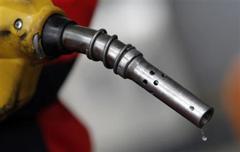
Oil rises on Goldman forecast hike, but trade choppy


NEW YORK (Reuters) - Oil rose on Tuesday in choppy trading after Goldman Sachs raised its price forecasts for Brent crude, saying demand from economic growth will eat into stockpiles and OPEC spare capacity.
Goldman raised its Brent price forecast to $115, $120 and $130 a barrel on a three-, six-, and 12-month horizon and boosted its year-end target for Brent to $120 per barrel from $105 and its 2012 forecast to $140 from $120.
A weaker dollar also supported oil prices, which had declined 2 percent the previous session.
The euro edged up from a two-year low against the dollar on German data that was better than expected, though nagging fears about Europe's debt crisis were expected to check euro gains.
Brent crude for July delivery rose $1.01 to $111.11 a barrel by 12:33 p.m. EDT (1633 GMT), swinging between 109.50 and $112.65.